Login

 Post Your Service
Download APP for FREE
Download our top-rated app, made just for you! It’s free, easy-to-use and smart!
Download APP for FREE

From the Business : Bamboo Online school offers personalized instruction and feedback tailored to each student's needs and learning style. Our platform allows students to access coursework and p...

In 2026, the term "Global Citizen" is everywhere. We want our children to be polyglots, tech-savvy, and culturally fluid. But there is a quiet question haunting many diaspora parents from Toronto to Tokyo: If my child speaks three languages but cannot whisper a prayer or tell a joke in Tamil, have they actually gained the world, or have they lost their center?

For many Tamil parents living in San Jose, Toronto, or New Jersey, the "Saturday Morning Struggle" is a real thing. You want your child to speak their mother tongue, but competing with Fortnite, Roblox, and YouTube is an uphill battle. Traditional textbooks feel like ancient relics to a digital-native child. Enter Playwithtamil—the platform that is officially flipping the script on language learning. By blending cutting-edge AI with arcade-style gamification, we’ve turned the Uyir Ezhuthukk...

"What did you do at school today, Kannamma?" On the other end of a WhatsApp video call in Chennai, a grandmother waits eagerly. In New York, her seven-year-old grandson hesitates. He knows the words "recess," "science project," and "library," but his Tamil vocabulary stops at "sapadu" and "amma." The conversation stalls, replaced by shy waves and awkward silence.
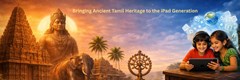
For a Tamil child growing up in the suburbs of New Jersey or the snowy streets of Toronto, "heritage" often feels like something stored in a dusty attic. It’s the language spoken during long-distance WhatsApp calls to grandparents or the traditional clothes worn twice a year. But as we move further into 2026, a quiet revolution is happening. The 2,000-year-old Sangam verses are no longer just etched on palm leaves—they are vibrating through silicon chips and retina displays.


